
When performance matters most - hydrogen for dual-use drone applications

Speed, silence, range and payload. These are critical requirements of high-performance drones for civilian, logistics and military applications.
When performance is the priority, hydrogen stands out head and shoulders above other aviation fuels and when combined with a PEM or high-temperature PEM (HTPEM) fuel cell, it adds many dimensions of unique benefits that align it perfectly with mission-critical use cases.
Hydrogen for dual-use drones – competing on unique properties, not price
Hydrogen aviation has been focused on achieving decarbonisation of this sector, which emits a similar amount of CO2 to ammonia production.
However, aviation fuel decarbonisation can be achieved through multiple pathways: biofuels, e-fuels and batteries. If net-zero flight is the goal, hydrogen must compete with cost-effective alternatives and drop-in substitutes for jet fuel. But, hydrogen, and especially green hydrogen is notoriously expensive and modification of the established fleet of aircraft and refuelling infrastructure is a daunting investment.
On the other hand, leaning on unique properties of hydrogen and fuel cell powertrains avoids price-based competition. And, working in emerging applications eliminates the risk of being stranded since there are no established assets for hydrogen to displace.
When it comes to modern drone applications, hydrogen will be selected for the operational benefits it will offer. Users will pay the price of hydrogen, because it will enable them to offer unique competitive advantage or achieve savings elsewhere in their drone fleet operating costs.
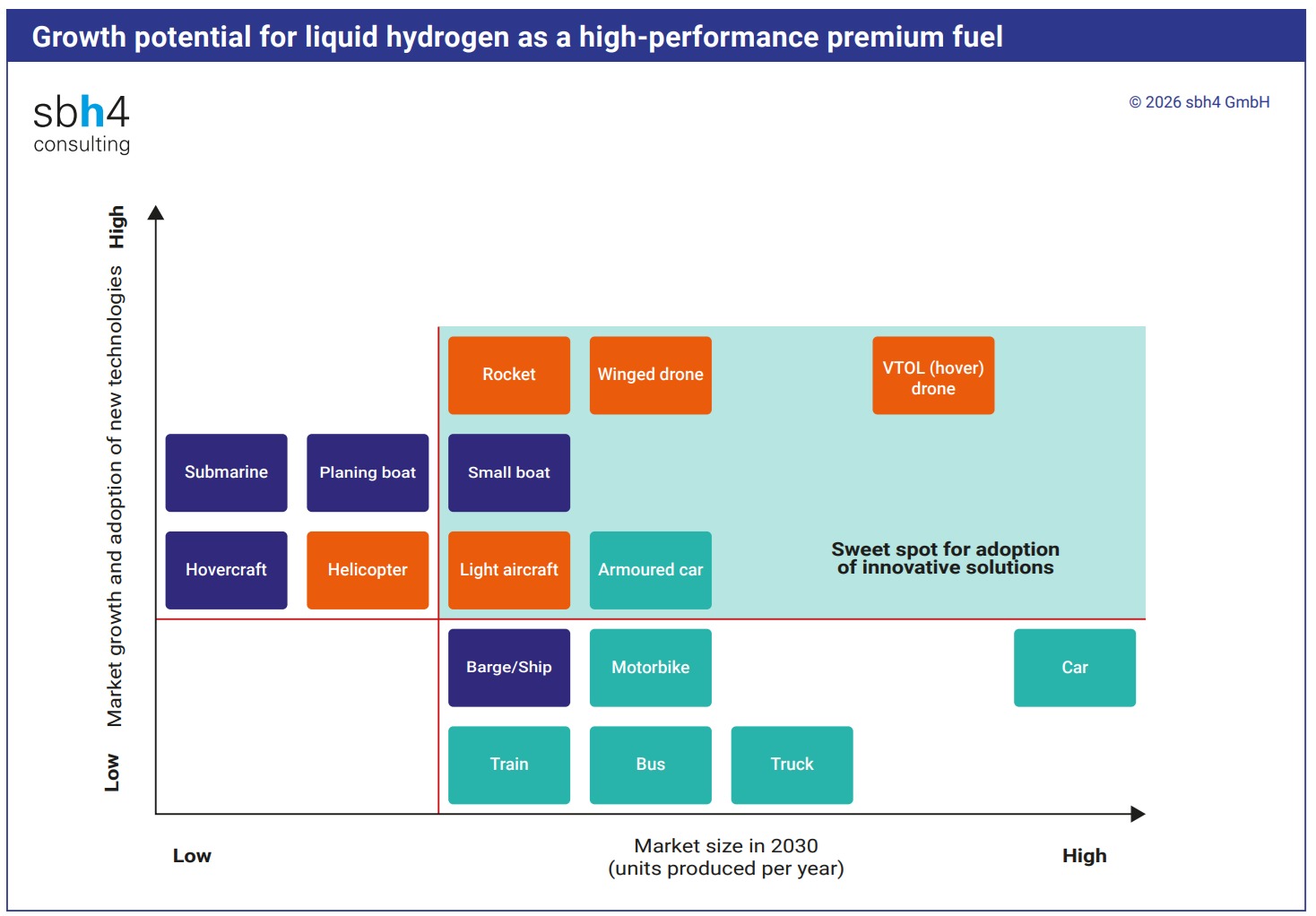
Nothing touches it
In aviation and aerospace the challenge is to conquer gravity. And this battle against is most acute when considering un-winged vertical take-off and landing (VTOL) hover drones and rockets. In this respect, hydrogen is the stand-out choice. No other fuel touches it: the gravimetric energy density of hydrogen is almost three times that of aviation kerosene.
A hydrogen-fed drone powertrain using an HTPEM fuel cell offers a power to weight ratio up to 1.2 kW/kg, competing with an internal combustion engine. So, when combining the fuel and the powertrain, the hydrogen system is well placed. The third element is the mass of the hydrogen storage tank.
Aluminium alloys combine strength and light weight with a reasonable cost and high availability. This has led them to be the default choice for aircraft bodies and wing structures. Due to these properties, aluminium is also ideal for building cryogenically insulated liquid hydrogen storage tanks for drones.
Putting together the HTPEM fuel cell, liquid hydrogen fuel and aluminium storage means the drone will have outstanding mission capabilities. It will pack a powerful punch, combining higher speed, increased maximum take-off weight (MTOW) and extended range.
UAVs accelerate commercialisation
Drones are often referred to as unmanned aerial vehicles (UAVs). This is an essential aspect for rapid deployment of hydrogen. The aviation industry is ultra-safety cautious. And especially so for passenger aircraft.
Certification requirements for developmental commercial passenger aircraft that have proposed to use hydrogen and fuel cell powertrains have been exhausting. Startups working in this field have burned cash and lost time in order to meet the stringent requirements.
Focusing on liquid hydrogen as a fuel for unmanned drone applications reduces the public risk and enables a more efficient certification process for players launching new products, powertrains and fuels into this market.
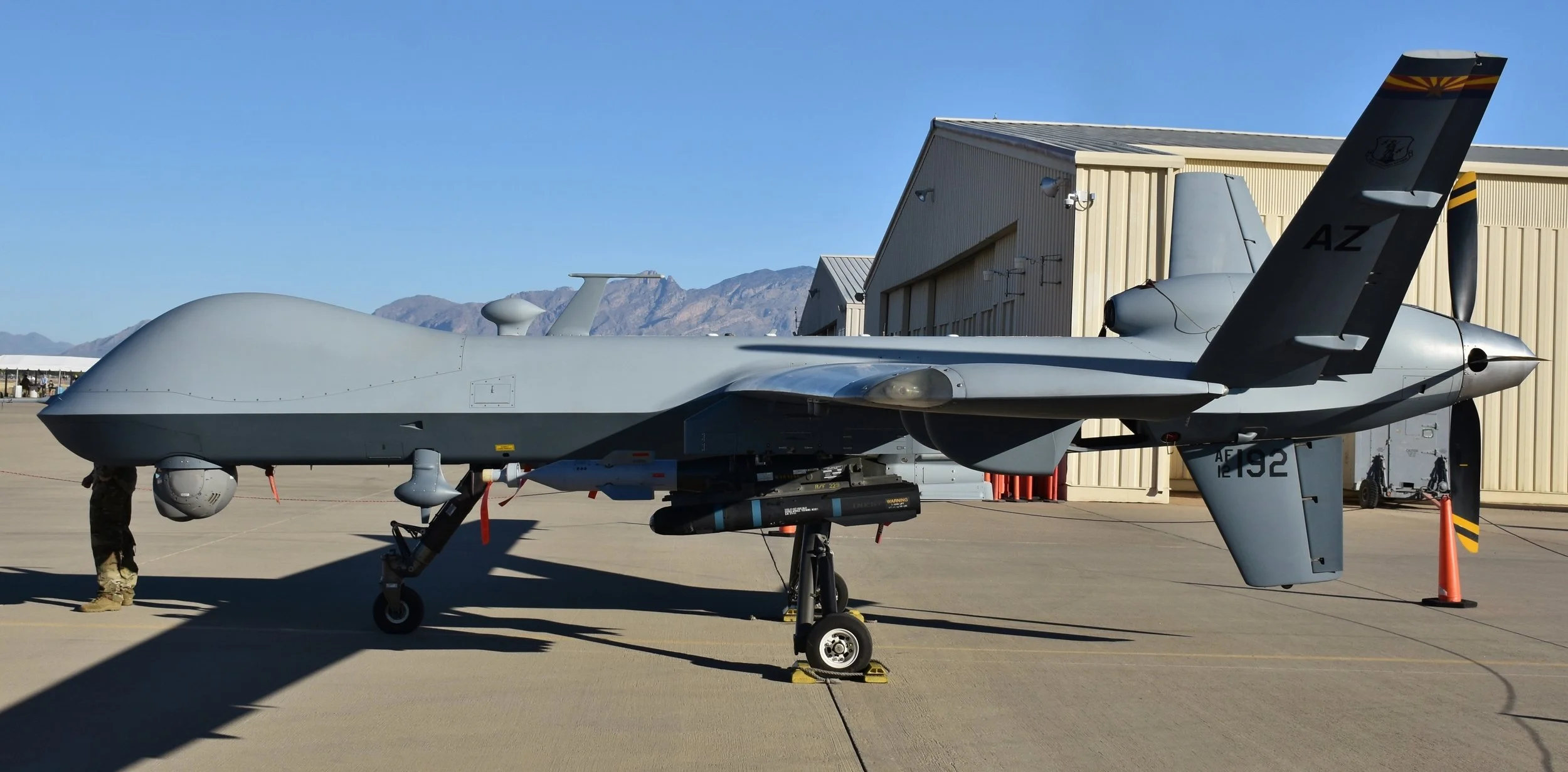
Image Credit: Michael Fitzsimmons/Shutterstock. Used with permission via sbh4 GmbH.
Silence and stealth
In military drone applications, silence means stealth. Getting the drone to its target is only possible if it is not detectable.
Using an internal combustion engine with kerosene fuel in a drone can add range and improve MTOW, but it also adds noise and operates at around 800 °C meaning it has a glowing heat signature.
Noise and heat signatures are almost eliminated using hydrogen. Not so with an internal combustion engine, and can be as loud as a speedway motorbike.
Batteries can also offer stealth. But only over short distances, low speeds and light payloads. Hydrogen rises to meet the needs of the tougher missions.
Civilian security and surveillance
Commercial security firms with contracts to monitor factories, warehouses or offices overnight used to send teams out to patrol on foot, or with cars. That practice is both risky and expensive.
Modern civilian security surveillance is turning to the use of drones. If they spot suspicious activity, appropriate escalation to the security staff or local police can be initiated. And they will arrive on the site forewarned of the hazard that lies ahead of them.
Wildfire lookout posts are strategically placed in forests to survey the landscape for any signs of fire. Spotter teams spent hours staring through binoculars, vigilantly scanning the horizon for smoke plumes. This surveillance task can now be undertaken by drones with sensors, in addition to high resolution optical cameras.
The key requirements of a drone in these applications are mission range, speed to cover the required territory to be observed and time on location. The instruments or cameras they carry are not heavy, so MTOW is not so important.
In addition to the need for speed and range, if there is wind, the drone’s fuel load will be used fighting against that. Liquid hydrogen maximises the amount of energy stored on board and will ensure the drone survives the mission.
Military applications
Surveillance, intelligence gathering and electronic signal jamming are military applications where valuable drones have been put to use. The intent in these cases is that the drone returns for refuelling and re-use. The electronic equipment on board is likely to be worth many times more than the drone frame itself.
Speed and stealth can get the drone to the target location. And then, time on target is the key. Especially when the target is remote from the launch area, a long flight duration is required to minimize the number of costly drones that are required to continuously be in-situ. MTOW may, or may not be critical, depending on the nature of the payload.
In one-way applications, such as attack drones, stealth during flight and maximising the payload weight may be the mission-critical reasons to select liquid hydrogen as a fuel.

Maritime drones
Small boats and micro-submarines are being developed for similar applications as airborne drones. Listening for enemy shipping or submarines is an ideal task for deep-sea drones. Mission range is critical here. And avoidance of emissions also.
Internal combustion engines cannot operate under water because the combustion exhaust gases must be vented. This is the limitation of diesel powered submarines that led to the invention of nuclear powered subs.
This leans into another benefit of the hydrogen powertrain – it produces only water and when an oxygen tank is also fitted in the micro submarine drone. The combination of hydrogen and oxygen on the fuel cell creates a silent, emissions free system.
Maritime mines can be triggered by magnetic materials such as carbon steel. Maritime stealth drones can avoid this risk by using plastics or fibre reinforced composites for their structure. However, the need to avoid magnetic steels extends to all components on board.
Using aluminium to manufacture a liquid hydrogen storage tank to combine with a PEM or HTPEM fuel cell enables a maritime drone that is almost undetectable.

Hydrogen’s sweet spot
Through its ultra-high energy density, liquid hydrogen punches above its weight in UAV applications. That means more payload, better speed, higher wind resistance, longer range or more time on target.
Combining hydrogen with a HTPEM, or PEM fuel cell delivers silent, stealthy power with a very low heat signature. Using aluminium to contain the liquid hydrogen avoids magnetic steels and minimises the mass of the power train.
Zero pollutant gas emissions are essential underwater and highly desirable in urban areas. Hydrogen reacts with oxygen on a fuel cell to form only water.
When considering the operational needs and purchasing criteria, many high-performance drones for dual-purpose applications will choose liquid hydrogen, contained in cryogenically insulated aluminium cylinders. This will surely be the fuel and package of choice.
***
Author credit – Stephen B. Harrison, sbh4 GmbH
sbh4 is an independent advisory firm focused on decarbonisation and defossilisation through e-fuels, e-fertilizers, biofuels, SAF, CCTUS, GHG emissions reduction, and the emerging hydrogen economy. For more information, visit www.sbh4.de.